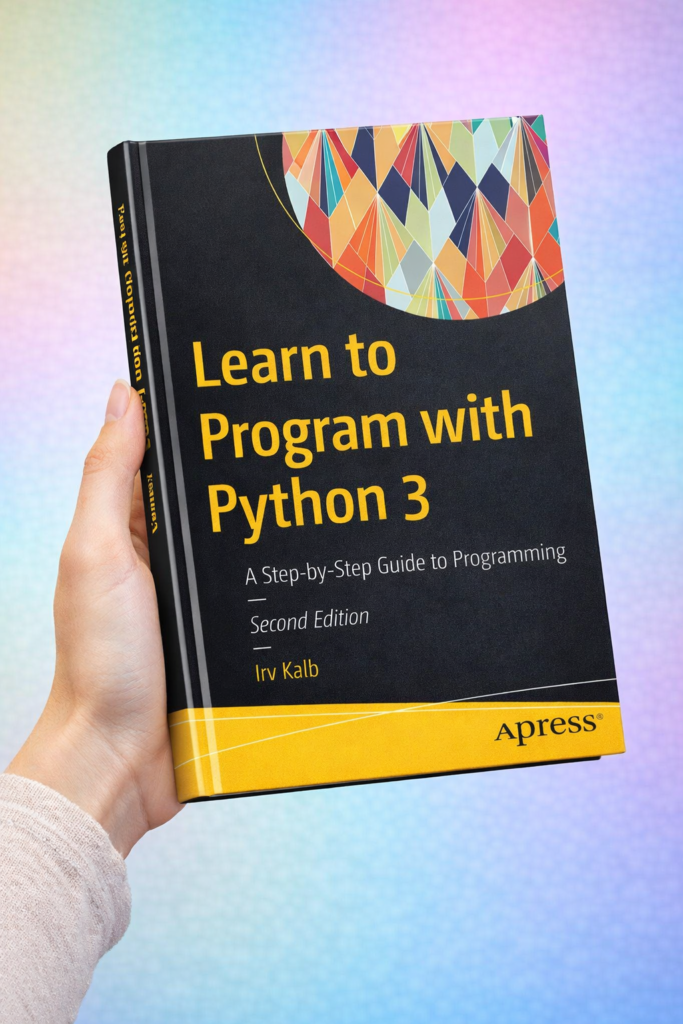
Learn to Program with Python 3 2nd Edition: A Step-by-Step Guide to Programming
Introduction
Programming is no longer a skill reserved only for computer scientists. Engineers, students, researchers, and professionals across almost every industry now rely on programming to solve problems, automate tasks, analyze data, and build intelligent systems. Among all programming languages, Python 3 stands out as one of the best choices for beginners and engineers alike.
Python 3 is simple, readable, powerful, and widely used in real-world engineering projects. Whether you are a student learning programming for the first time or a professional engineer looking to add automation and data analysis skills to your toolbox, Python 3 provides a solid foundation.
This article is a complete beginner-friendly engineering guide to learning Python 3. It covers theory, definitions, step-by-step explanations, detailed examples, real-world applications, common mistakes, challenges, and solutions. By the end, you will understand what Python 3 is, how it works, and how engineers use it in modern projects.
Background Theory
What Is Programming?
Programming is the process of giving instructions to a computer so it can perform a specific task. These instructions are written in a programming language, which acts as a bridge between human thinking and machine execution.
At a theoretical level, programming is based on:
-
Algorithms: Step-by-step procedures to solve problems
-
Logic: Decision-making using conditions
-
Data: Information stored and processed by the computer
-
Control Flow: The order in which instructions are executed
Python helps beginners focus on problem-solving and logic, rather than complex syntax.
Why Python 3?
Python was created in the late 1980s by Guido van Rossum. Python 3, released in 2008, is the modern and actively maintained version.
Key theoretical advantages of Python 3:
-
High-level language (close to human language)
-
Interpreted (no need for manual compilation)
-
Cross-platform (Windows, Linux, macOS)
-
Large standard library
-
Strong community support
Python 3 emphasizes readability, which makes it ideal for learning and engineering documentation.
Technical Definition
What Is Python 3?
Python 3 is a high-level, interpreted, general-purpose programming language that supports multiple programming paradigms, including procedural, object-oriented, and functional programming.
From an engineering perspective:
-
High-level: Abstracts hardware complexity
-
Interpreted: Executes code line by line
-
Dynamically typed: No need to declare variable types
-
Modular: Code can be reused using modules and libraries
Core Components of Python 3
Python programs are built using:
-
Variables
-
Data types
-
Operators
-
Control structures
-
Functions
-
Modules and packages
Understanding these components is essential for engineering applications.
Step-by-Step Explanation
Step 1: Installing Python 3
To begin programming with Python 3:
-
Download Python 3 from the official website
-
Install it on your system
-
Verify installation using the command:
Python comes with an interactive environment called the Python Shell, which allows you to test code instantly.
Step 2: Writing Your First Python Program
The traditional first program is:
Explanation:
-
print()is a built-in Python function -
The text inside quotes is a string
-
The program outputs text to the screen
This demonstrates how Python executes instructions sequentially.
Step 3: Understanding Variables and Data Types
Variables store data in memory.
Example:
Common data types:
-
int→ integers -
float→ decimal numbers -
str→ text -
bool→ True or False
Python automatically detects the data type, which simplifies learning.
Step 4: Operators and Expressions
Operators allow calculations and comparisons.
Arithmetic operators:
Comparison operators:
Logical operators:
These concepts are essential in engineering logic and decision-making.
Step 5: Control Structures
Control structures define how code flows.
Conditional Statements
Loops
Loops repeat tasks efficiently.
Loops are heavily used in simulations and data processing.
Step 6: Functions
Functions allow code reuse.
Functions improve:
-
Code organization
-
Readability
-
Reusability
Engineers rely on functions for modular design.
Detailed Examples
Example 1: Simple Engineering Calculation
Calculate force using Newton’s Second Law:
Formula:
F=m×a
Python implementation:
This shows how Python translates mathematical equations into code.
Example 2: Temperature Conversion
Convert Celsius to Fahrenheit:
F=(C×9/5)+32
Such scripts are common in engineering utilities.
Example 3: Data Processing Loop
This simulates reading sensor data from an IoT system.
Real World Application in Modern Projects
Python 3 is widely used in modern engineering projects, including:
1. Data Analysis and Engineering
Engineers use Python libraries like:
-
NumPy
-
Pandas
-
Matplotlib
Applications:
-
Performance analysis
-
Signal processing
-
Experimental data evaluation
2. Automation and Scripting
Python automates repetitive tasks:
-
File handling
-
Report generation
-
System monitoring
Automation improves efficiency and reduces human error.
3. Web and Software Development
Python frameworks:
-
Flask
-
Django
Used for:
-
Engineering dashboards
-
Control systems
-
Internal tools
4. Artificial Intelligence and Machine Learning
Python dominates AI development:
-
TensorFlow
-
PyTorch
-
Scikit-learn
Used in:
-
Predictive maintenance
-
Computer vision
-
Robotics
5. Embedded Systems and IoT
Python (MicroPython) runs on microcontrollers for:
-
Sensor control
-
Data collection
-
Smart devices
Common Mistakes
Beginners often face similar problems:
1. Indentation Errors
Python uses indentation instead of braces.
Incorrect:
Correct:
2. Variable Name Confusion
Avoid using reserved words:
3. Ignoring Error Messages
Python error messages provide useful debugging information. Engineers should read them carefully.
Challenges & Solutions
Challenge 1: Understanding Logic
Solution:
Practice small problems and visualize flowcharts.
Challenge 2: Debugging Code
Solution:
Use print statements and step-by-step execution.
Challenge 3: Applying Theory to Practice
Solution:
Build mini-projects related to your engineering field.
Case Study
Case Study: Python for Engineering Automation
Problem:
An engineering student needs to calculate stress values for multiple materials.
Approach:
Use Python to automate calculations.
Result:
-
Faster calculations
-
Reduced manual errors
-
Easy scalability
This demonstrates Python’s real engineering value.
Tips for Engineers
-
Start with basic syntax before advanced libraries
-
Practice daily with small scripts
-
Apply Python to real engineering problems
-
Learn to read documentation
-
Use version control (Git) as you progress
-
Write clean and readable code
FAQs
1. Is Python 3 suitable for absolute beginners?
Yes, Python 3 is one of the easiest programming languages to learn.
2. Do engineers really use Python in real projects?
Yes, Python is widely used in automation, data analysis, AI, and simulations.
3. How long does it take to learn Python 3 basics?
With daily practice, basic concepts can be learned in 4–6 weeks.
4. Is Python fast enough for engineering applications?
Python is fast enough for most tasks and can integrate with C/C++ for performance-critical parts.
5. Can Python replace MATLAB?
In many cases, yes. Python offers free alternatives for numerical computing.
6. Do I need math skills to learn Python?
Basic math is enough at the beginning. Advanced math helps in engineering applications.
Conclusion
Learning to program with Python 3 is one of the smartest decisions for students and engineers in today’s technology-driven world. Python combines simplicity with power, allowing beginners to learn programming fundamentals while enabling professionals to build real-world engineering solutions.
By understanding the background theory, technical definitions, step-by-step workflow, and practical examples, you can confidently start your Python journey. As you progress, Python will become not just a programming language, but a problem-solving tool that enhances your engineering skills and career opportunities.
The key to mastering Python 3 is consistent practice, real-world application, and continuous learning. Start small, build projects, and grow step by step