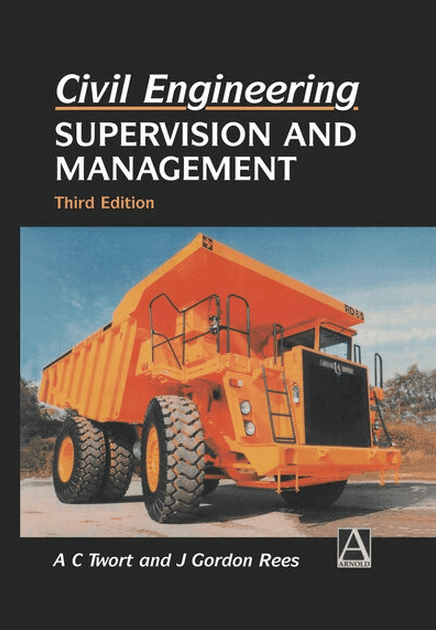
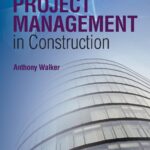
Project Management in Construction 7th Edition: Complete Engineering Guide for Modern Construction Professionals 🏗️📊🚧
Introduction 🌍🏗️
Construction projects are among the most complex engineering activities in the world. From residential buildings and commercial towers to bridges, highways, and industrial facilities, successful project delivery depends on effective management practices. Project Management in Construction 7th Edition has become one of the most recognized references for engineering students, construction managers, project engineers, architects, and industry professionals seeking a structured understanding of construction project execution.
Modern construction projects involve multiple stakeholders, including owners, contractors, consultants, suppliers, regulatory agencies, and end users. Coordinating these participants requires technical knowledge, leadership skills, financial planning, risk management capabilities, and a deep understanding of project controls.
The seventh edition reflects contemporary construction challenges such as digital transformation, Building Information Modeling (BIM), sustainability initiatives, lean construction methodologies, and advanced scheduling techniques. It provides a framework that bridges theoretical engineering concepts with practical project execution.
Whether you are a civil engineering student preparing for a construction management career or an experienced project professional looking to enhance project outcomes, understanding the principles presented in Project Management in Construction 7th Edition can significantly improve project performance, safety, quality, and profitability.
Background Theory 📚⚙️
Evolution of Construction Project Management
Construction management has evolved dramatically over the past century. Early projects relied heavily on manual coordination, paper documentation, and experience-based decision-making.
As projects became larger and more sophisticated, structured project management methodologies emerged to address:
- Schedule control
- Budget management
- Resource allocation
- Quality assurance
- Risk mitigation
- Contract administration
The increasing complexity of infrastructure projects required systematic approaches capable of integrating engineering design, procurement, construction activities, and operational requirements.
Importance of Project Management in Engineering
Project management serves as the foundation for successful engineering project delivery. It ensures that projects meet:
| Project Objective | Description |
|---|---|
| Scope | Deliver required project features |
| Time | Complete within schedule |
| Cost | Stay within budget |
| Quality | Meet technical specifications |
| Safety | Protect workers and public |
| Sustainability | Reduce environmental impact |
Without proper management, even technically sound engineering designs can fail during execution.
Relationship Between Engineering and Management
Engineering focuses on technical solutions, while project management focuses on organizing resources to implement those solutions effectively.
The integration of these disciplines enables organizations to:
✅ Reduce project delays
✅ Improve communication
🚀 Increase productivity
✅ Enhance safety performance
✅ Optimize costs
🚀 Improve stakeholder satisfaction
Technical Definition 🔍📐
What Is Project Management in Construction?
Construction project management is the systematic planning, coordination, execution, monitoring, and control of construction activities from project conception through completion.
It involves managing:
- Human resources
- Materials
- Equipment
- Finances
- Contracts
- Risks
- Quality requirements
- Project schedules
The objective is to deliver a completed facility that satisfies client requirements while maintaining acceptable levels of cost, time, quality, and safety.
Core Components
Scope Management
Defines project boundaries and deliverables.
Time Management
Develops schedules and controls project progress.
Cost Management
Plans, estimates, budgets, and controls project expenses.
Quality Management
Ensures compliance with engineering standards and specifications.
Risk Management
Identifies and mitigates potential project threats.
Resource Management
Optimizes workforce, equipment, and materials.
Step-by-Step Explanation 🔄🏗️
Project Initiation
Every construction project begins with identifying objectives and feasibility.
Key activities include:
- Business case development
- Feasibility studies
- Site selection
- Preliminary budgeting
- Stakeholder identification
Outputs
- Project charter
- Initial scope statement
- Feasibility report
Project Planning
Planning is often considered the most critical phase.
Activities include:
- Work Breakdown Structure (WBS)
- Schedule development
- Cost estimation
- Risk analysis
- Procurement planning
Work Breakdown Structure Example
| Level | Activity |
|---|---|
| 1 | Building Project |
| 2 | Site Preparation |
| 2 | Foundation |
| 2 | Structural Frame |
| 2 | Finishing Works |
A well-defined WBS improves project control and accountability.
Project Scheduling
Scheduling determines activity sequences and durations.
Common techniques include:
Gantt Charts 📅
Visual representation of activities over time.
Critical Path Method (CPM)
Identifies activities that directly affect project completion.
Program Evaluation and Review Technique (PERT)
Useful when activity durations are uncertain.
Resource Allocation
Resource planning ensures efficient utilization of:
- Labor 👷
- Equipment 🚜
- Materials 🧱
- Capital 💰
Proper allocation minimizes idle time and productivity losses.
Project Execution
During execution:
- Construction activities begin.
- Resources are deployed.
- Contracts are administered.
- Safety procedures are enforced.
The project manager coordinates all stakeholders to maintain progress.
Monitoring and Control
Project performance is continuously evaluated.
Performance indicators include:
| Metric | Purpose |
|---|---|
| Cost Variance | Budget tracking |
| Schedule Variance | Progress measurement |
| Productivity Rate | Labor efficiency |
| Safety Metrics | Accident prevention |
Project Closeout
The final phase includes:
- Final inspections
- Commissioning
- Documentation
- Handover
- Lessons learned
Successful closeout ensures smooth transition to facility operations.
Comparison ⚖️🏗️
Traditional vs Modern Construction Project Management
| Feature | Traditional Approach | Modern Approach |
|---|---|---|
| Documentation | Paper-based | Digital |
| Scheduling | Manual | Software-driven |
| Communication | Meetings only | Real-time platforms |
| Design Coordination | 2D Drawings | BIM Models |
| Risk Analysis | Reactive | Proactive |
| Decision Making | Experience-based | Data-driven |
Waterfall vs Agile Construction Management
| Factor | Waterfall | Agile |
|---|---|---|
| Flexibility | Low | High |
| Planning | Detailed upfront | Iterative |
| Changes | Difficult | Easier |
| Risk Response | Slower | Faster |
Modern projects increasingly combine elements of both methodologies.
Diagrams & Tables 📊📈
Construction Project Lifecycle
Initiation
     ↓
Planning
     ↓
Scheduling
     ↓
Execution
     ↓
Monitoring
     ↓
Closeout
Project Management Triangle
        Time
         ▲
         │
         │
Cost ◄───┼───► Scope
         │
         ▼
       Quality
Typical Cost Distribution
| Category | Percentage |
|---|---|
| Labor | 30% |
| Materials | 40% |
| Equipment | 15% |
| Overhead | 10% |
| Contingency | 5% |
Actual values vary by project type and location.
Examples 🏢🌉🏭
Example 1: Residential Building
Project Details:
- 10-story apartment building
- Budget: $15 million
- Duration: 24 months
Management Tasks:
- Contractor coordination
- Material procurement
- Safety supervision
- Progress tracking
Result:
Project completed within budget and two weeks ahead of schedule.
Example 2: Highway Construction
Project Scope:
- 50 km highway expansion
- Multiple bridges
- Drainage systems
Management Challenges:
- Traffic control
- Weather impacts
- Environmental compliance
Project managers used CPM scheduling and earned value management to maintain control.
Example 3: Industrial Plant
Complex industrial facilities require:
- Mechanical systems
- Electrical systems
- Instrumentation
- Process equipment
Effective project integration prevents costly rework.
Real World Applications 🌎🚧
Infrastructure Projects
Examples include:
- Highways
- Airports
- Railways
- Ports
These projects require coordination among government agencies, engineers, and contractors.
Commercial Buildings
Applications include:
- Shopping centers
- Hotels
- Office towers
Project management ensures timely completion and tenant readiness.
Energy Sector
Construction management plays a major role in:
- Solar farms ☀️
- Wind farms 🌬️
- Power plants ⚡
- Oil and gas facilities ⛽
These projects often involve significant regulatory requirements.
Healthcare Facilities
Hospitals require:
- Strict quality standards
- Advanced mechanical systems
- Specialized equipment installation
Project managers coordinate multidisciplinary teams to achieve compliance.
Common Mistakes ❌⚠️
Poor Scope Definition
Unclear requirements lead to:
- Cost overruns
- Delays
- Client dissatisfaction
Inadequate Risk Assessment
Ignoring risks often results in unexpected project disruptions.
Weak Communication
Communication failures create misunderstandings among stakeholders.
Unrealistic Scheduling
Overly optimistic schedules frequently cause project delays.
Insufficient Resource Planning
Poor resource management can reduce productivity significantly.
Lack of Change Control
Uncontrolled project changes increase costs and complexity.
Challenges & Solutions 🛠️💡
Challenge 1: Labor Shortages
Many regions face skilled workforce shortages.
Solution
- Workforce training
- Automation
- Productivity improvement initiatives
Challenge 2: Cost Inflation
Material prices can fluctuate dramatically.
Solution
- Long-term supplier agreements
- Early procurement strategies
- Cost contingencies
Challenge 3: Schedule Delays
Weather and supply chain issues often affect timelines.
Solution
- Buffer activities
- Alternative suppliers
- Schedule risk analysis
Challenge 4: Safety Incidents
Construction remains a high-risk industry.
Solution
- Safety training
- Regular inspections
- Strong safety culture
Challenge 5: Technological Adoption
Resistance to new technology can reduce efficiency gains.
Solution
- Employee training
- Pilot projects
- Leadership support
Case Study 🏗️📖
Large Urban Transit Project
Project Overview
A metropolitan transit authority launched a subway extension project valued at $2 billion.
Project objectives included:
- Expanding transportation capacity
- Reducing congestion
- Improving sustainability
Initial Challenges
Project managers encountered:
- Utility conflicts
- Land acquisition issues
- Community concerns
- Complex stakeholder requirements
Management Strategy
The team implemented:
✅ BIM coordination
✅ CPM scheduling
🚀 Risk registers
✅ Earned Value Management
✅ Digital reporting dashboards
Results
Achievements included:
- 95% schedule compliance
- Reduced design conflicts
- Improved stakeholder communication
- Enhanced safety performance
The project demonstrated the value of integrated construction management practices.
Tips for Engineers 🎯👷
Master Scheduling Tools
Learn industry software such as:
- Primavera P6
- Microsoft Project
- BIM platforms
Improve Communication Skills
Technical expertise alone is insufficient.
Strong communication improves:
- Team coordination
- Stakeholder engagement
- Problem resolution
Understand Contracts
Contract knowledge helps engineers:
- Avoid disputes
- Manage risks
- Protect project interests
Focus on Safety
Safety should be integrated into every project activity.
Develop Financial Awareness
Understanding project economics improves decision-making.
Embrace Technology
Modern engineers should understand:
- BIM
- Drones
- Digital twins
- AI-assisted analytics
- Cloud collaboration systems
Frequently Asked Questions ❓📚
What is the primary purpose of construction project management?
The primary purpose is to deliver projects safely, on schedule, within budget, and according to quality requirements.
Why is Project Management in Construction 7th Edition important?
It provides comprehensive guidance on modern construction management principles, tools, and best practices.
What skills are required for construction project managers?
Key skills include leadership, communication, scheduling, budgeting, risk management, and technical engineering knowledge.
How does BIM support project management?
BIM improves coordination, visualization, clash detection, and project communication.
What is the Critical Path Method?
CPM is a scheduling technique used to identify activities that directly influence project completion dates.
Why do construction projects experience delays?
Common causes include poor planning, weather conditions, labor shortages, design changes, and supply chain disruptions.
What role does risk management play?
Risk management identifies threats and develops mitigation strategies before problems occur.
Is project management useful for small projects?
Yes. Even small projects benefit from structured planning, scheduling, budgeting, and quality control.
Conclusion 🎓🏗️🚀
Project Management in Construction 7th Edition provides an extensive framework for understanding how construction projects are planned, executed, monitored, and completed successfully. As construction projects continue to increase in complexity, the need for effective management practices becomes even more critical.
The principles covered—including scope management, scheduling, budgeting, resource allocation, quality assurance, risk management, and stakeholder coordination—form the backbone of modern construction engineering. By applying these methodologies, project teams can improve efficiency, reduce waste, minimize delays, enhance safety, and achieve better project outcomes.
For engineering students, the concepts establish a strong academic foundation for future careers. For professionals, they provide practical tools for solving real-world construction challenges. As the industry embraces digital technologies, sustainability initiatives, and data-driven decision-making, the lessons from Project Management in Construction 7th Edition remain highly relevant and valuable for delivering successful projects across the United States, United Kingdom, Canada, Australia, and Europe. 🌍🏗️📈✨